
Event details
- November 8, 2026
- 3:00 pm - 6:00 pm
- Hybrid: Hawaii Betsuin and on Zoom 1727 Pali Highway, Honolulu, HI 96813
27th Annual Bloom-Futaba Memorial Lectures
Sponsored by Honpa Hongwanji Hawaii Betsuin
“Re-Thinking the Western View of Buddhism”
Sunday, November 8, 2026 | 3-6 PM
Honpa Hongwanji Hawaii Betsuin & on Zoom
Guest Lecturer:
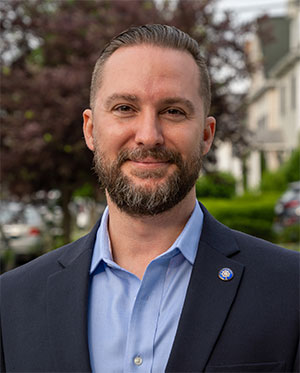
Rev. Dr. Aaron Shōken Proffitt
(Rev. Proffitt will be in person at Hawaii Betsuin)

Schedule
- 3:00 pm Welcome and Introduction
- 3:10 pm “How did Buddhist Paths Diverge?”
- 4:00 pm Discussion & Questions
- 4:15 pm Break
- 4:30 pm “Dohan’s Unifying Contribution”
- 5:30 pm Discussion & Questions
- 6:00 pm Closing
A brochure is available.
Registration
Free Registration Advised – visit this Google form or the associated QR code to register.
Lectures will be held in-person at Hongwanji Betsuin and livestreamed on Zoom.
Lecturer’s Statement
Contemporary scholars and Buddhists often treat Esoteric Buddhism and Pure Land Buddhism as separate schools, diametrically opposed approaches to awakening.
In this presentation I will first reconsider how the modern field of Buddhist studies came to construct these as two distinct objects of inquiry, and present the thought of Dōhan 道範 (1179–1252), an early medieval scholar-monk and ritual theorist from Mt. Koya who forces us to rethink what we think we know about Japanese and Mahayana Buddhism. In 1224, Dōhan wrote the Compendium on Esoteric Mindfulness of Buddha (Himitsu nenbutsu shō) to answer a deceptively simple question: “Why do practitioners of so many different traditions rely on the practice of chanting the name of Amitābha?”
To answer this question, Dōhan draws upon virtually the whole of the East Asian Mahayana scholastic tradition. When we take Dōhan seriously, situate him in his historical and institutional context, and read across supposed divisions between schools and sects like he did, the results are unsettling for the categories many of us inherit when we first start learning about Buddhism.”
In Part I of this talk, I will trace how the confluence of modern Buddhist studies and early-modern Japanese sectarianism conspired to develop a design for describing the diversity of the Buddhist tradition. I will then examine some of the evidence for the popularity of Pure Land rebirth within and beyond the Esoteric collection.
About the Speakers
Rev. Dr. Aaron Shōken Proffitt is an associate professor of Japanese Studies at SUNY-Albany, and an ordained Buddhist priest in the Jōdo Shinshū Hongwanji-ha lineage. Originally from Lynchburg, TN, Proffitt is a scholar of East Asian Buddhism, publishing popular and academic articles in English and Japanese on Esoteric Buddhism, Pure Land Buddhism, and the Lotus Sutra. He is the author of Esoteric Pure Land Buddhism (University of Hawaii, 2023). Proffitt serves the New York Buddhist Church as a minister’s assistant, and cofounded Albany Buddhist Sangha. He is currently working on a translation of Saicho’s Kenkairon, an edited volume on the Mantra of Light, and a children’s book on the life and teachings of Buddha.
Doctor George Tanabe (respondent) Professor emeritus in the Department of Religion at the University of Hawai‘i, Dr. Tanabe is also President of BDK America. Bukkyō Dendō Kyōkai (BDK), the Society for the Promotion of Buddhism, which promotes an understanding of Buddhist wisdom through sponsoring activities and programs around the world.
About the Lecture Series
The Futaba Lecture Series is endowed by Dr. Alfred & Ms. Dorothy N. Bloom to honor the memory of friend and mentor, Professor Kenko Futaba. Dr. Futaba, a noted Shin Buddhist scholar, served as President of Kyoto’s Ryukoku University from 1983 to 1995 and then became Chancellor of Kyoto Women’s University.
Al fervently hoped that this lecture series would be a continuing inspiration for the nurturing of American Buddhism and for the social participation of Buddhists in the quest of social justice and peace. His website continues to serve as a resource for students today: https://bschawaii.org/shindharmanet/